





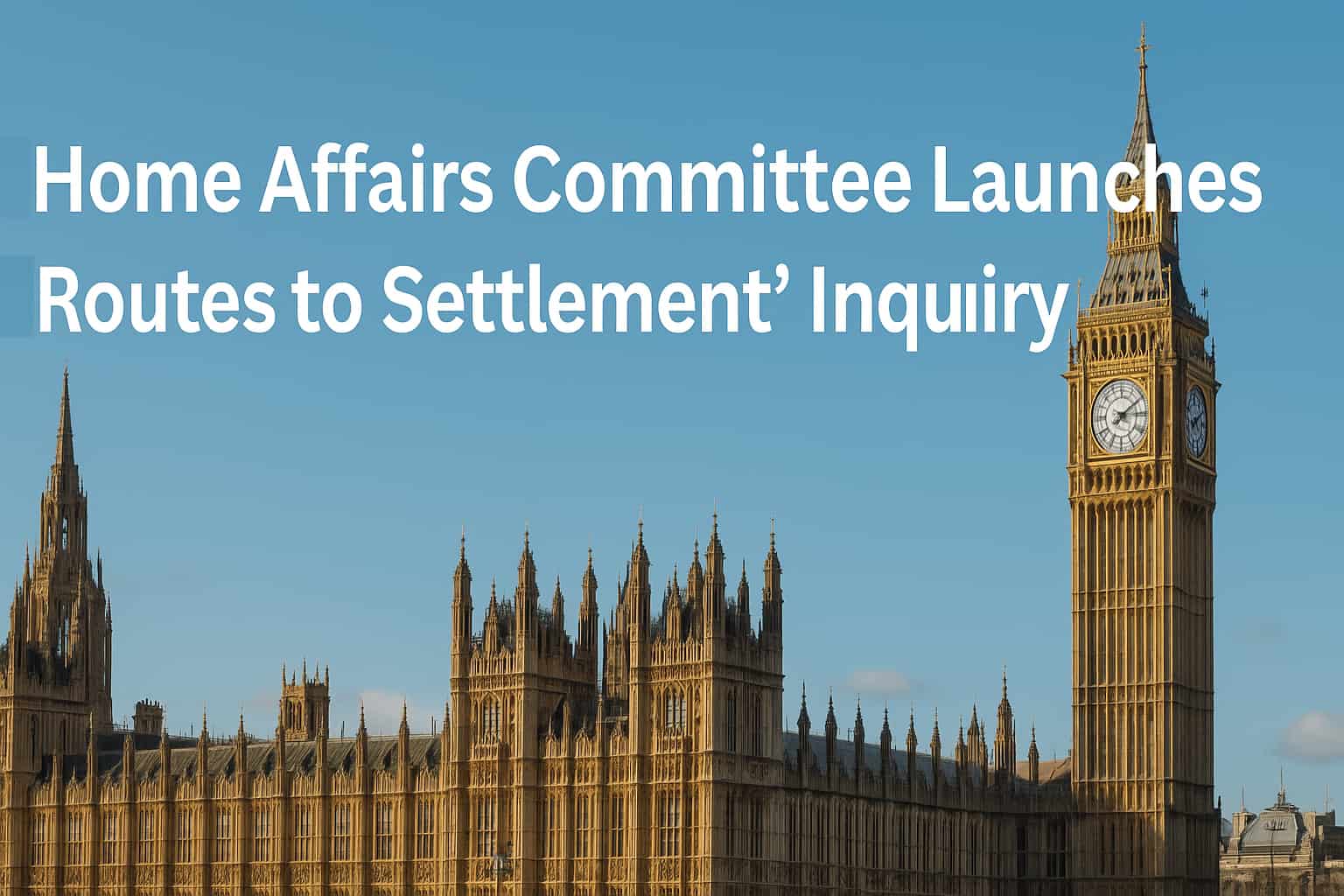
On 21 October 2025, the Home Affairs Committee (HAC) launched a new inquiry titled “Routes to Settlement.” This inquiry will explore proposed changes to how people qualify for Indefinite Leave to Remain (ILR) — a milestone that allows migrants to settle permanently in the UK.
The Committee aims to examine the evidence base for potential reforms to ILR criteria and assess their economic and social impact on migrants, families, and employers across the country.
🔍 What’s the inquiry about?
Here’s a summary of the key points:
- The inquiry will look at how Government proposals — set out in the recent White Paper — could affect immigration levels, the labour market, social integration, and the UK economy.
- One significant proposal is to extend the qualifying period for ILR from five years to as many as ten in some cases.
- The inquiry is separate from the Government’s own consultation. Instead, the Committee will gather written evidence, hold hearings, and publish an independent report with its findings and recommendations.
📢 Call for Evidence
If you have insight, data, or lived experience to share, Parliament wants to hear from you.
- Submit written evidence here ➡️ Parliament Submission Portal
- Full details ➡️ Call for Evidence: Routes to Settlement
- 🗓️ Deadline: 2 December 2025
💡 Why This Matters
1️⃣ For employers & the labour market: Extending ILR eligibility from 5 to 10 years could have serious implications for talent attraction, staff retention, and the UK’s ability to stay competitive in global recruitment.
2️⃣ For migrants & families: Longer settlement routes mean longer uncertainty — more visa renewals, higher costs, and delays in building stable lives, buying homes, or integrating fully into local communities.
3️⃣ For civic & policy stakeholders: This is an opportunity to rethink what “settlement” really means in modern Britain. Is it purely about time spent in the UK, or should it reflect contribution, integration, and shared values?
🧭 What You Should Keep in Mind
If you work in business, HR, immigration services, migrant support, or policy, here are a few practical steps:
- Track the inquiry timeline: The evidence window is open now. Submitting insights or data could help shape Parliament’s recommendations.
- Assess your risk landscape: Identify which groups in your workforce or client base might be affected by longer ILR timelines or stricter eligibility rules.
- Scenario-plan: Ask questions like “What if ILR moves to 10 years?” or “What if new integration or income requirements are added?” Prepare your HR and immigration strategies accordingly.
- Contribute evidence: Real-world stories and data can help Parliament understand the trade-offs between tougher settlement rules and the UK’s need to attract and retain global talent.
- Consider equity and fairness: Think about how these changes could impact certain groups — such as early-career migrants, lower-income workers, or families balancing caring responsibilities.
- Shape the narrative: Settlement policy is not just a technical issue — it reflects how the UK defines belonging. Organisations can play a role in framing this conversation positively and inclusively.
🗣️ How You Can Engage
If you’re an employer, policy expert, lawyer, academic, or community leader, your contribution matters.
Here’s how to take part:
- 🗣️ Submit written evidence via the official portal
- 📊 Share data or case studies on how ILR rules affect integration, the economy, or family stability
- 🧾 Provide insights from your professional or lived experience
- 📅 Deadline: 2 December 2025
🧩 What Happens Next
Once the evidence window closes, the Committee will:
- Review all submissions;
- Hold oral evidence sessions with key witnesses; and
- Publish a final report setting out its findings and recommendations to Government.
This is a vital opportunity for evidence-based policymaking — and for stakeholders to shape how the UK defines “settlement” for the future.
✍️ Final Thought
Whether you see settlement as a privilege earned over time or a pathway to deeper belonging, now is the time to make your voice heard.
Sharing thoughtful evidence and lived experience can help ensure any future reforms are fair, proportionate, and grounded in reality — reflecting both the UK’s values and its economic needs.