





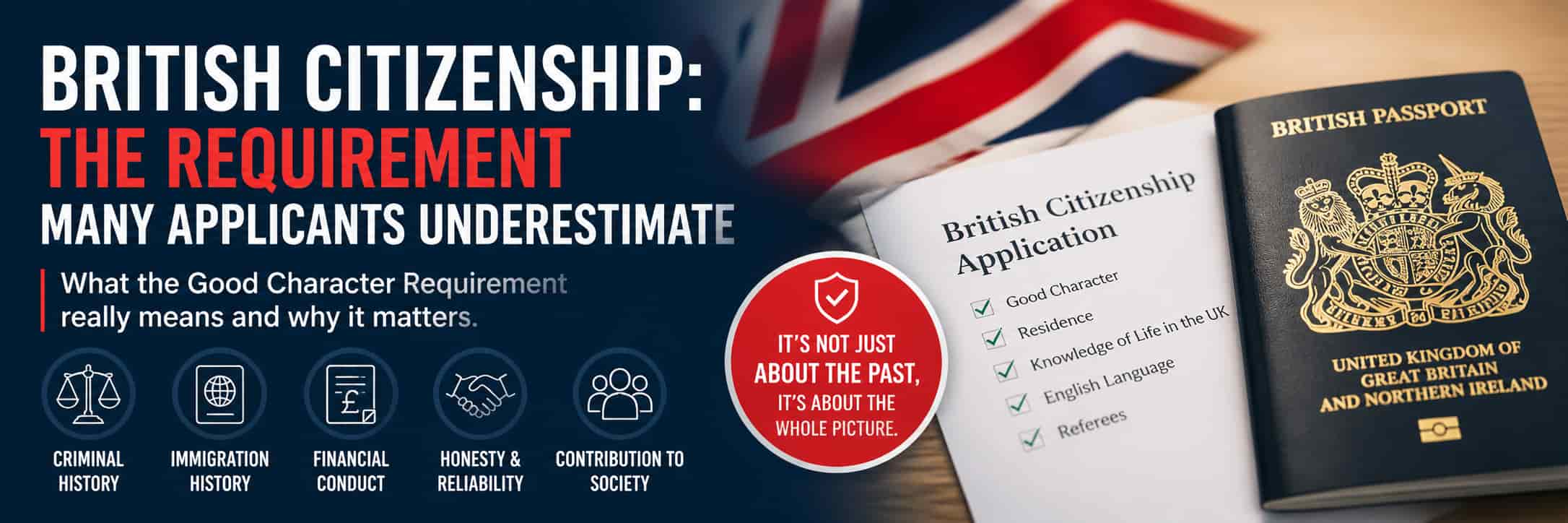
Many British citizenship refusals happen because of something the applicant did not think was important.
The good character requirement is one of the most underestimated parts of a citizenship application.
Applicants often focus on:
- Absences
- Life in the UK test
- English language requirement
- Referees
- Documents
But they may not stop to ask:
Is there anything in my history that the Home Office may consider relevant to good character?
On 30 April 2026, the Home Office updated its good character guidance for nationality applications.
The update does not mean every past mistake will automatically lead to refusal.
But it does make clear that caseworkers must look at the applicant’s overall conduct and decide, on the balance of probabilities, whether the person is of good character.
In simple terms:
Looking at everything, is it more likely than not that this person meets the good character requirement?
This can include:
- Criminal history
- Immigration breaches
- Tax or financial issues
- Previous refusals or deception concerns
- Overstaying or unlawful work
- Any issue affecting honesty or reliability
But the wider circumstances can also matter.
Was it a one-off issue?
How long ago did it happen?
Has there been a clean record since?
Is there evidence of rehabilitation or contribution to the community?
The key point is this:
A minor issue with a clear explanation may be manageable.
A minor issue that is hidden or answered incorrectly can become far more serious.
British citizenship is a major step. The application should not be treated as just another form to complete.
The good character requirement deserves careful attention because sometimes the issue that leads to refusal is the one the applicant thought did not matter.
A well-prepared application should explain what happened, provide relevant evidence, and show why the applicant should still be considered of good character overall.